
Dental Bridge
What a bridge is
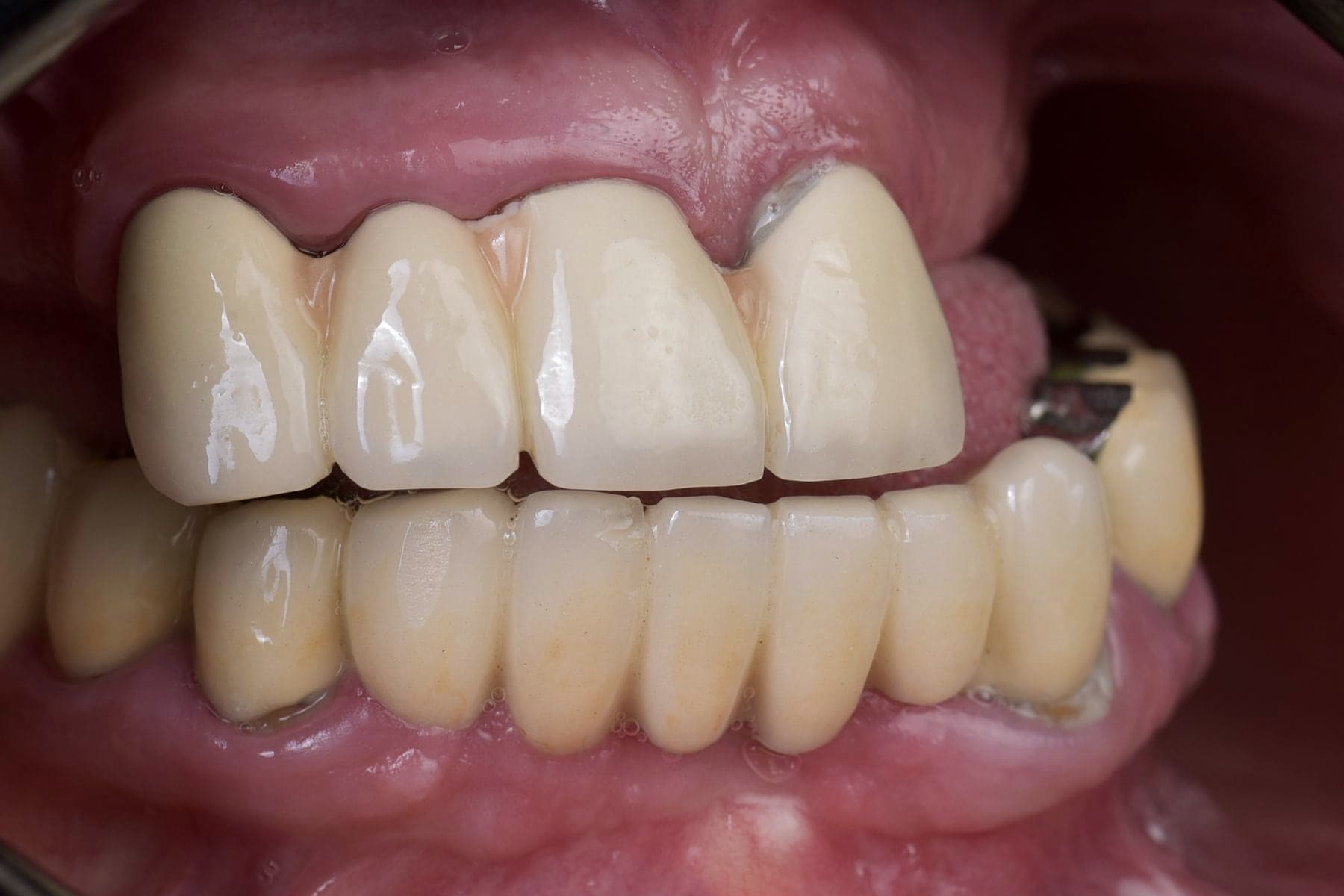
A tooth suspended between two crowns.
A bridge replaces a missing tooth with an artificial one joined to crowns fitted on the neighbouring teeth. The assembly is cemented: it does not come out, and it is lived with like fixed teeth.
The replaced tooth rests on nothing beneath it; it is carried by the teeth either side. That is what makes a bridge simple, and it is also its real cost.
Bridge or implant: what decides
The state of the neighbouring teeth, above all.
A bridge means preparing the two teeth either side, even where they are perfectly sound. That is irreversible, and it is the main argument for an implant, which touches nothing around it.
The reasoning reverses where those neighbouring teeth are already crowned or badly damaged: preparing them then removes nothing that was not already lost, and the bridge deals with two problems at once. The implant, though, remains the only one of the two that maintains bone where the tooth is missing.
Learn more about dental implants
Materials, and what they change
The same as for a crown, with one extra constraint.
A bridge is made in zirconia, porcelain-fused-to-metal or pressed ceramic, as a crown is. The difference is mechanical: the suspended part flexes with every bite, which puts the strength of the material first.
Zirconia and porcelain-fused-to-metal are the usual choices for a back bridge. Pressed ceramic, more attractive and more brittle, is kept for short spans on teeth that show.
Learn more about dental crownsThe stages of fitting one
One trip, as for a crown.
The abutment teeth are prepared and the impression taken at the first appointment; the final bridge is cemented a few days later, once the laboratory has done its work. A temporary bridge is worn in between.
Where an abutment tooth is badly damaged, root treatment or a core build-up comes first. That is what makes the number of appointments vary, more than the bridge itself.
Lifespan and upkeep
Cleaning under the suspended tooth decides everything.
A bridge does not decay, but the abutment teeth do — and under the suspended tooth, plaque collects where ordinary floss does not pass. Threader floss or an interdental brush reaches it, and that daily habit is what separates a bridge that lasts from one that has to be remade.
Decay under an abutment crown is invisible and painless until it is advanced. It is the most common reason bridges are lost, often taking an abutment tooth with them.
Dental Bridge — Frequently Asked Questions
- Do healthy teeth have to be prepared?
- Yes, the two teeth either side of the gap, and it is permanent. Where those teeth are intact, that is reason to look seriously at an implant before choosing a bridge.
- How long does a bridge last?
- Several years, often considerably more. Its lifespan depends on the health of the abutment teeth and on cleaning under the suspended section, not on the material chosen.
- Can several teeth be replaced?
- Yes, but each additional suspended tooth increases the load on the abutments. Beyond a certain span, an implant solution becomes more sensible than a long bridge.

@estoriaclinic
Get in touch

The message is already written — all that is left is to send it.
Or write to us here
Batna
Cité Bouzourane, Coopérative El Yasmine
Villa N° 15, à côté de la mosquée At-Taqwa
Batna, Algérie
Daily except Friday — 08:30 to 16:30
Get directions