
Veneers
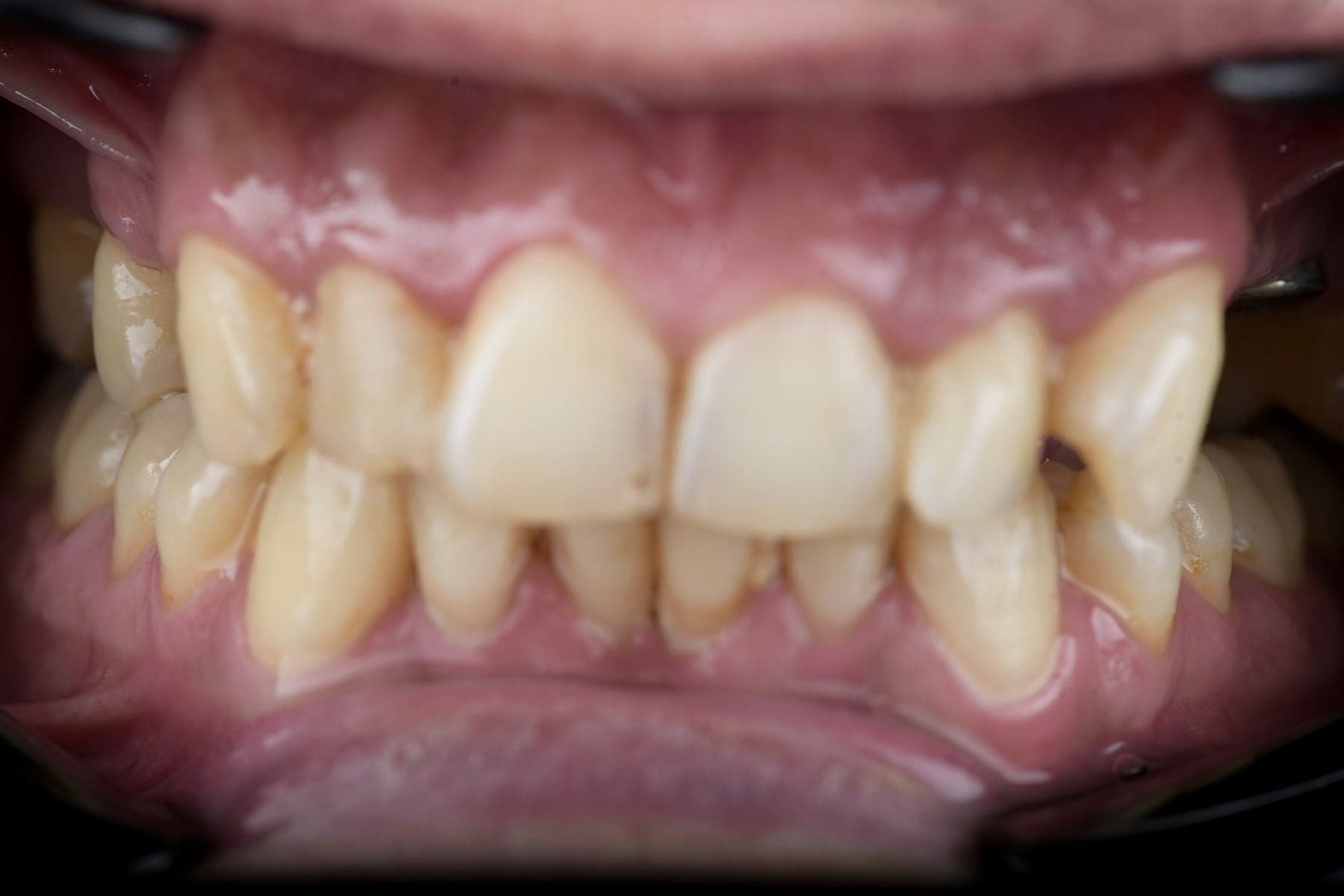
What a veneer is
A thin ceramic shell bonded to the visible face.
A veneer covers the front face of a tooth to change its shape, colour or apparent alignment. It does not strengthen the tooth: it changes how it looks. That is the difference from a crown, which wraps the whole tooth because too little of it is left.
The ceramic is made in a laboratory from an impression, then bonded. A composite veneer is instead built directly in the chair; it costs less and dulls sooner.
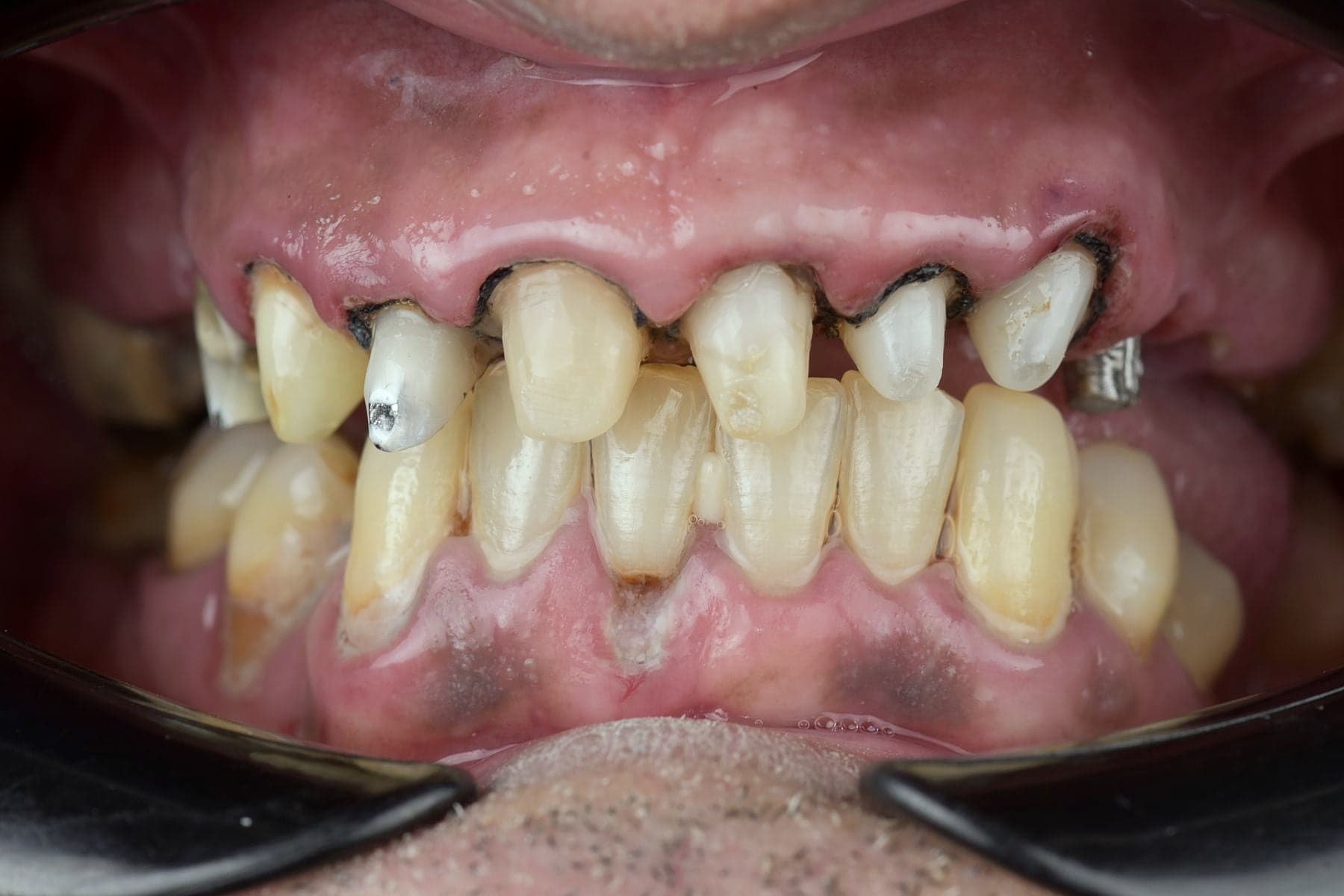
What fitting one takes off the tooth
Little, but rarely nothing — and it does not grow back.
Most veneers require the enamel to be reduced slightly, by a few tenths of a millimetre, so the ceramic does not leave the tooth thicker than it was. That reduction is not reversible: once a tooth is prepared, it will need to stay covered.
That is worth stating plainly before starting, because it is the one part of the treatment that cannot be undone. Shape and shade can be discussed, corrected, remade; removed enamel cannot.
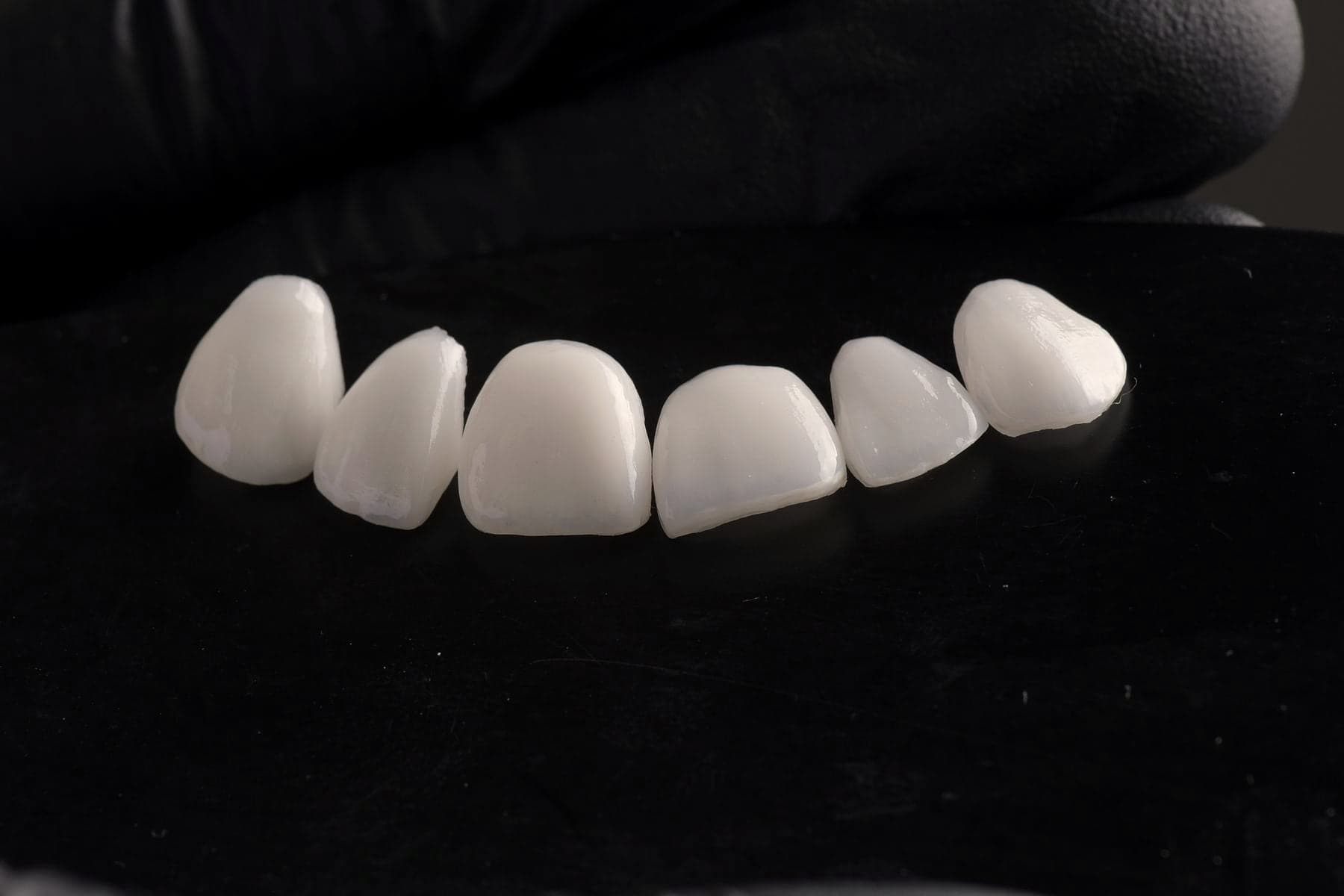
One tooth, or a smile
Eight to ten teeth for a complete project.
A single veneer corrects a tooth that stands out — chipped, stained, slightly rotated. The hard part there is shade: it has to match neighbouring teeth that are not changing.
A complete project instead covers the whole zone that shows when you smile, usually eight to ten teeth, and is settled at the smile study. The price of a project is not the price of one veneer multiplied out, because the zone involved depends on your smile rather than on a package.
Learn more about smile design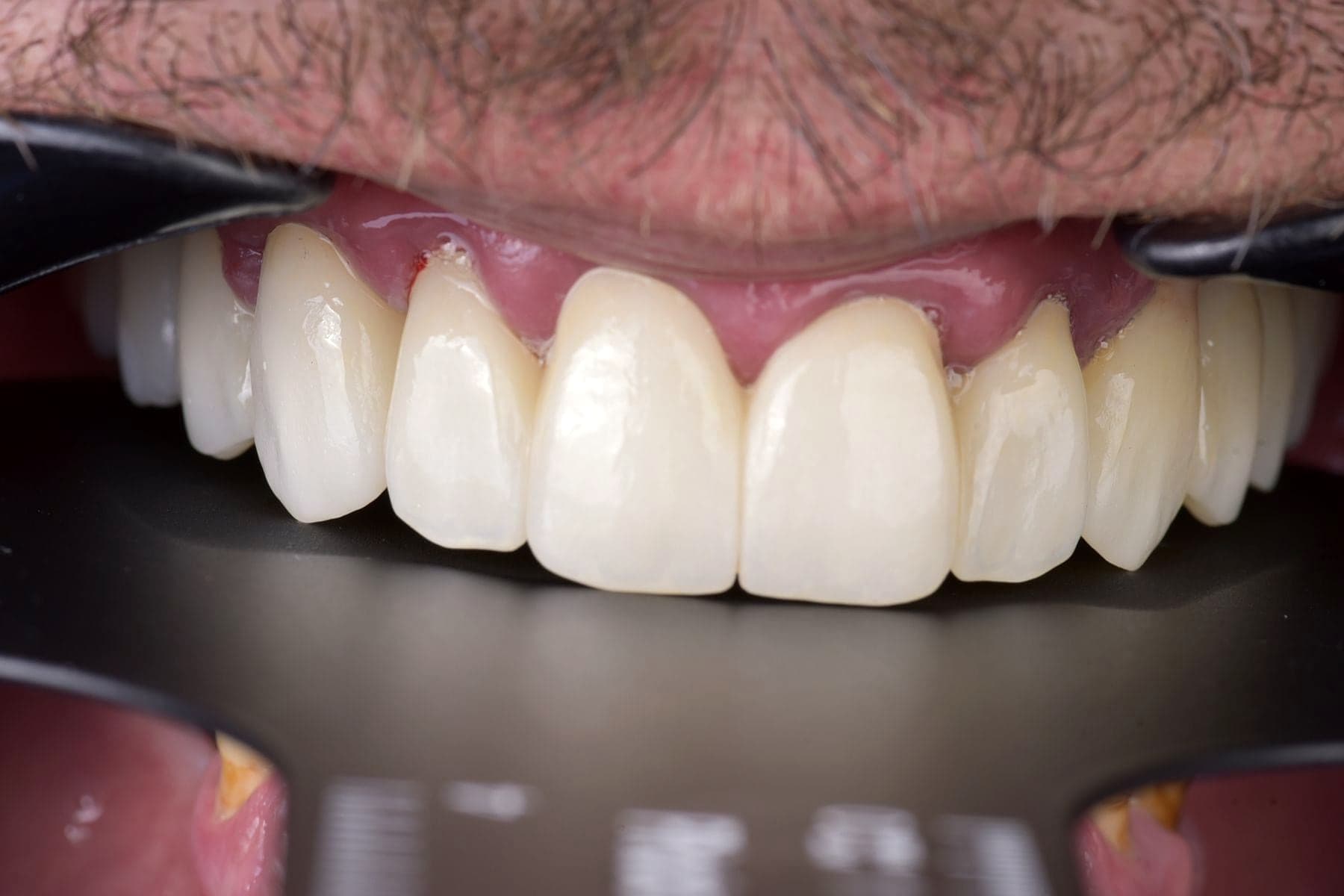
Living with veneers
What lifts them off, and what makes them last.
Ceramic does not stain and does not lighten with whitening, which means the shade chosen at the start is the shade you keep. What defeats a veneer is debonding at the edge, night-time grinding, and the habit of opening or cutting things with the front teeth.
A patient who clenches at night wears a guard, without which the project does not survive. Fixed prosthetics fitted at the clinic carry a five-year warranty.
Learn more about bruxismVeneers — Frequently Asked Questions
- Do veneers damage the teeth?
- They usually require a little enamel to be reduced, which is permanent: the tooth will need to stay covered afterwards. The amount removed is small, but it is not nothing, and it is decided before starting.
- How long do they last?
- Several years, often considerably more. It is night-time grinding and knocks on the front teeth that cut their life short, not ordinary wear.
- Can veneers be whitened?
- No, ceramic does not respond to whitening products. Where whitening is wanted it is done first, so that the veneer shade is chosen against teeth that are already lighter.
- How much do veneers cost?
- From €200 per ceramic tooth, including lab work, temporaries and warranty, and from €1,800 for a complete eight-to-ten-tooth project. Composite veneers are quoted after examination.

@estoriaclinic
Get in touch

The message is already written — all that is left is to send it.
Or write to us here
Batna
Cité Bouzourane, Coopérative El Yasmine
Villa N° 15, à côté de la mosquée At-Taqwa
Batna, Algérie
Daily except Friday — 08:30 to 16:30
Get directions