
Dental Bone Grafting
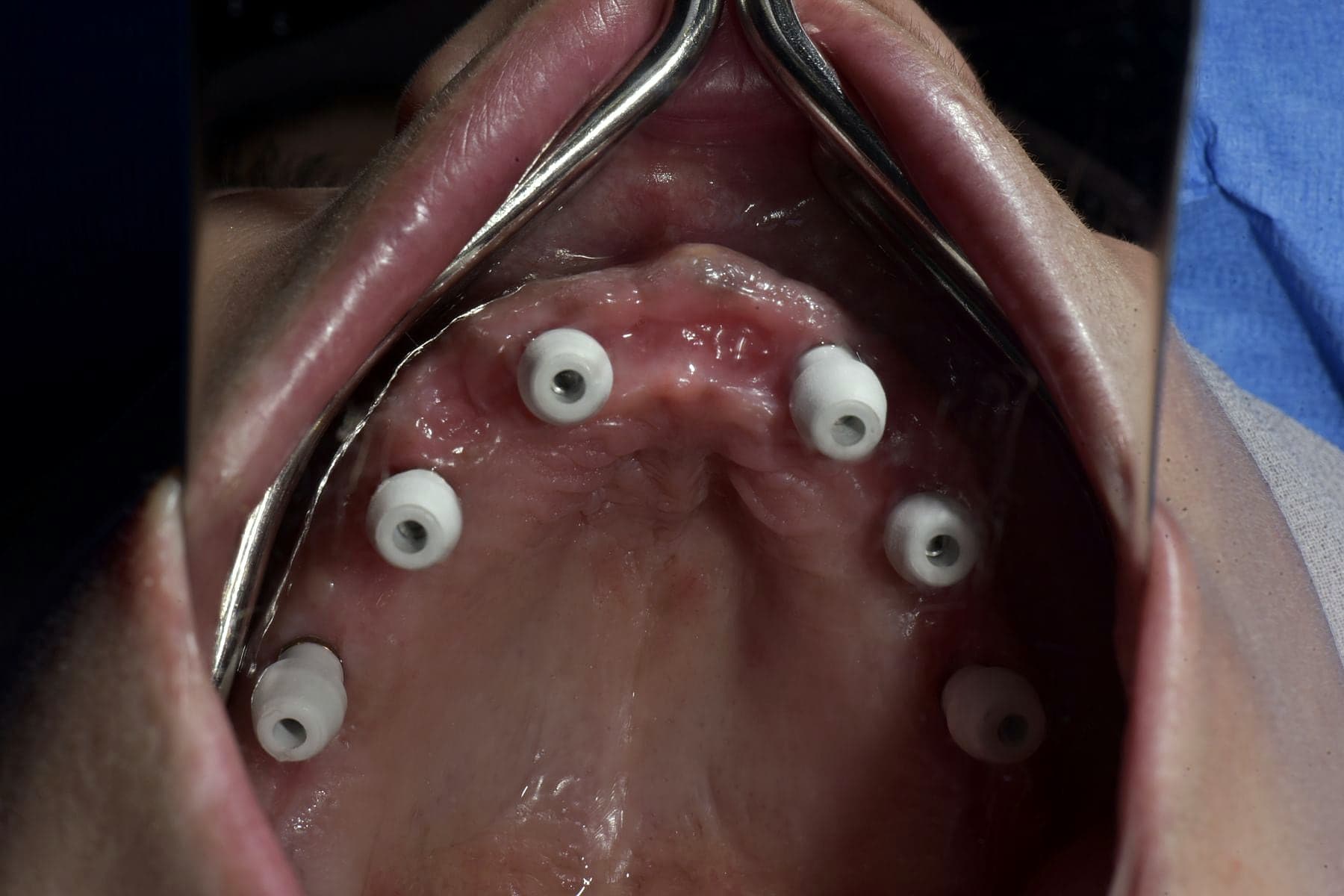
Why bone goes missing
Bone exists only to carry a tooth.
The bone around a root is maintained by the forces the tooth passes into it while chewing. As soon as a tooth is lost, that bone has no function and resorbs. The loss is fastest in the first year, then continues slowly.
Old infection, periodontitis or long-term wear of a removable denture speed it up. That is why an extraction fifteen years ago and a recent one are not the same problem when an implant is being considered.
How we know a graft is needed
From the scan, not by eye.
An implant needs enough bone height and width around it, with a few millimetres of clearance from the nerve below and the sinus above. An ordinary radiograph does not show width; three-dimensional imaging answers that.
The answer is binary only in appearance: depending on the deficit, the graft comes first, the graft is done at the same time as placement, or a shorter implant or a slightly different position is chosen. That reading is what decides, and it is done at the consultation.
Learn more about dental implants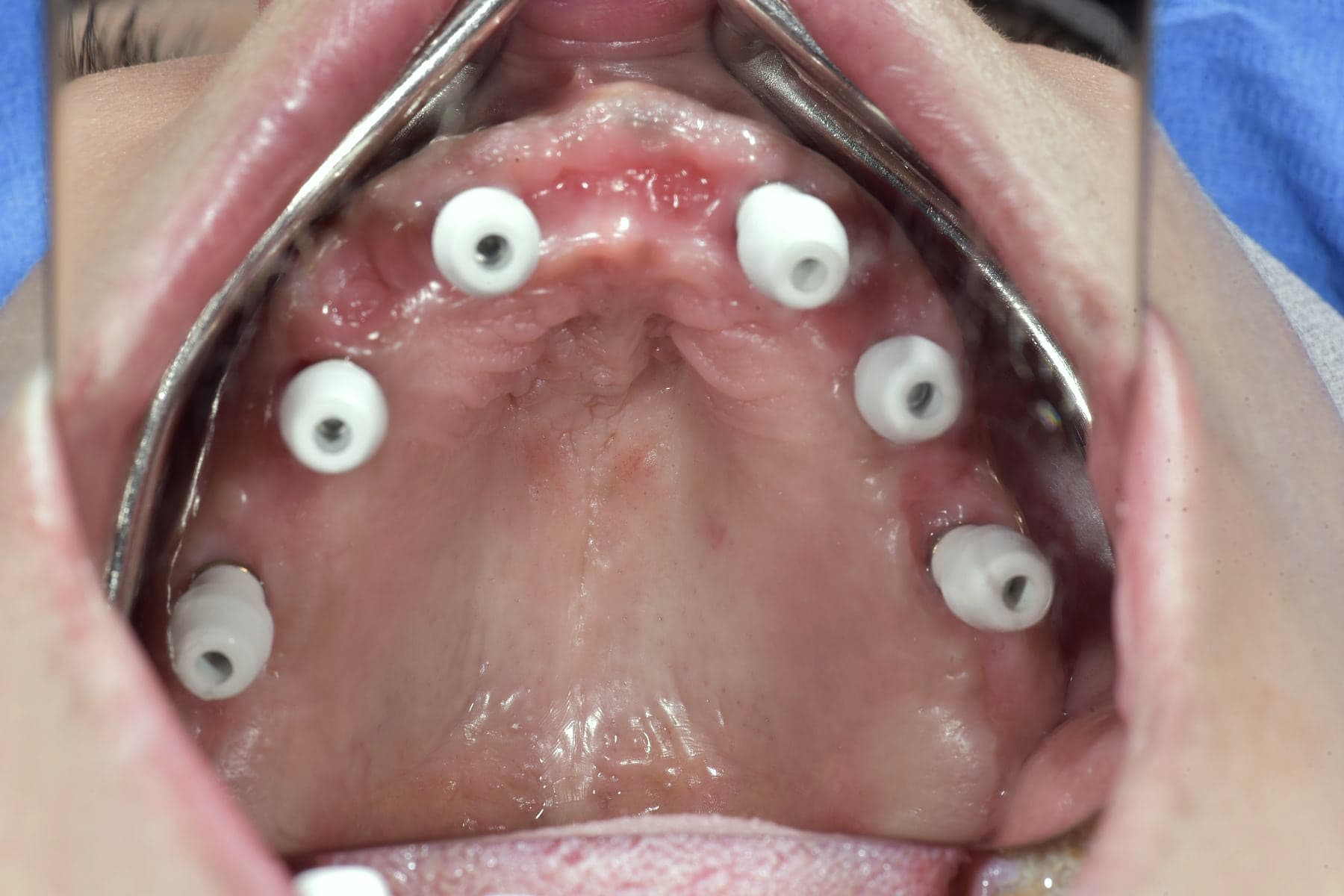
The kinds of graft
Filling a socket, widening a ridge, or lifting a sinus.
Socket preservation is done at the moment of extraction: the site is filled to limit the resorption to come. It is by far the simplest graft, and the opportunity for it is lost for good if it is not taken that day.
Ridge augmentation adds volume to bone that has become too thin or too low. A sinus lift, on upper molars, raises the sinus membrane to create height beneath it. The material used can be the patient’s own bone or a substitute, and that choice is discussed before the procedure.
The wait before the implant goes in
Several months, added to everything else.
A graft has to turn into living bone before it can carry an implant, which takes several months depending on the type and the volume. That delay is added to the three or four months that then separate placing the implant from its crown.
For a patient coming from abroad, this is the piece of information that changes the calendar: a case needing a graft first runs to three trips rather than two, or a year rather than a season. It is said at the consultation, before anything is booked.
Recovery
Close to an extraction, with one extra instruction.
Swelling for two or three days, moderate discomfort, soft cold food: recovery resembles that of a surgical extraction. Smoking matters more here than elsewhere, because it directly compromises whether the graft takes.
After a sinus lift there is one further instruction: do not blow your nose, sneeze with your mouth open, and avoid straining for as long as directed, while the membrane heals.
Dental Bone Grafting — Frequently Asked Questions
- Is grafting painful?
- It is done under local anaesthetic. Recovery is that of oral surgery: swelling and discomfort for a few days, covered by the painkillers prescribed.
- Where does the grafted bone come from?
- It can be bone taken from you, or a substitute. The choice depends on the volume to be rebuilt and on the site, and it is discussed before the procedure.
- Can a graft be avoided?
- Sometimes: a shorter implant, a slightly different position, or a graft done at the same time as placement is enough depending on the deficit. The scan settles it. The surest way to avoid one remains filling the site at the time of extraction.

@estoriaclinic
Get in touch

The message is already written — all that is left is to send it.
Or write to us here
Batna
Cité Bouzourane, Coopérative El Yasmine
Villa N° 15, à côté de la mosquée At-Taqwa
Batna, Algérie
Daily except Friday — 08:30 to 16:30
Get directions