
Periodontal Treatment

The disease that costs people healthy teeth
It is not decay that loosens teeth.
Periodontitis is an infection of what holds the tooth in: the gum, the ligament and the bone. It destroys that support progressively, until the tooth loosens and is lost — often a perfectly sound tooth, without a single cavity.
It advances painlessly, which is why it is found late. The signs worth knowing are gums that bleed when brushed, persistent bad breath, teeth that appear to lengthen, and gaps opening between the front teeth.
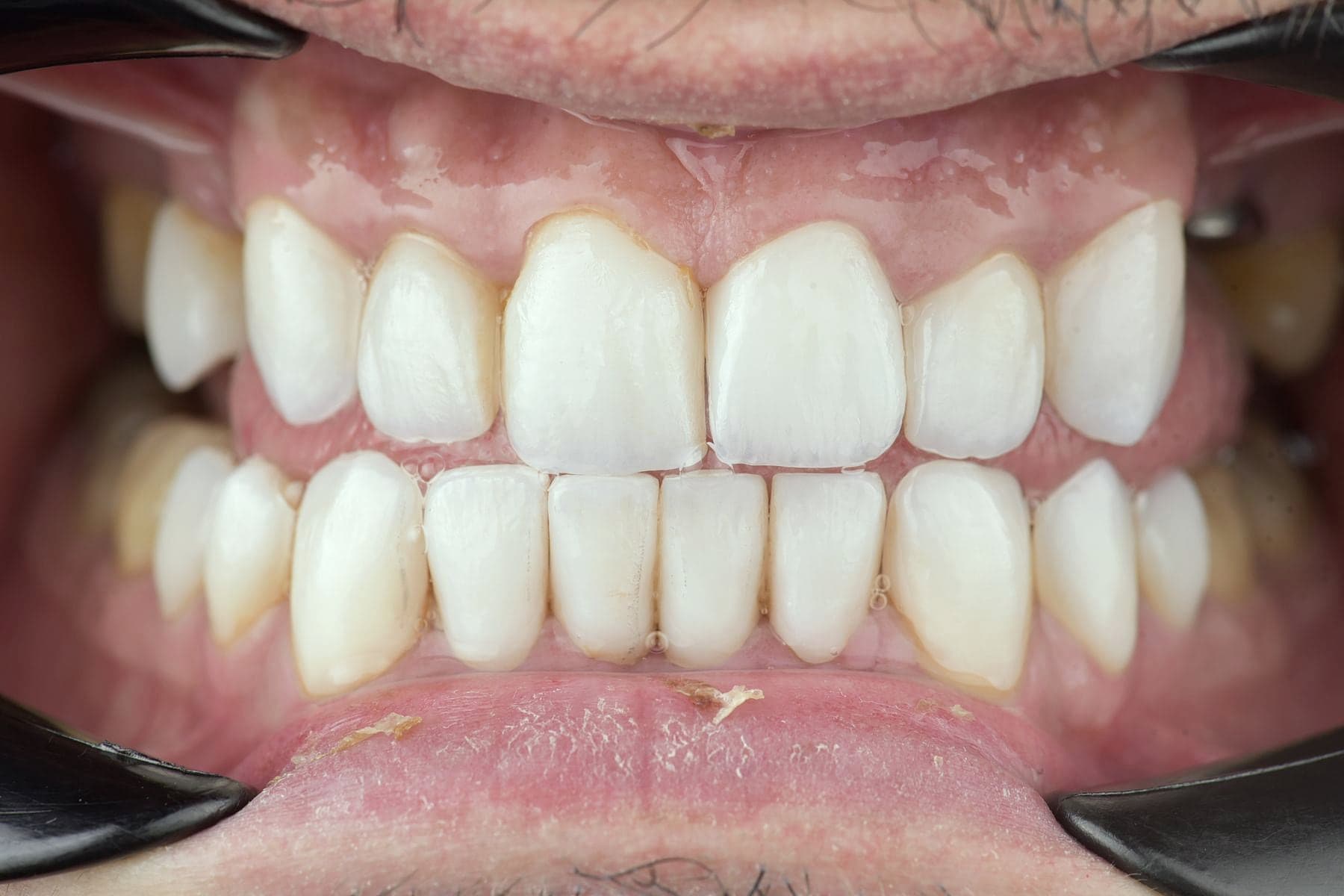
Bleeding is not normal
Bleeding when brushing is a sign, not a sign of brushing too hard.
Many patients stop brushing an area because it bleeds. That is the opposite of what helps: a healthy gum does not bleed, and bleeding signals inflammation sustained by plaque at that exact spot.
At the gingivitis stage, before the bone is affected, everything is still reversible with cleaning and correct brushing. It is the only stage at which the answer is that simple, and it is worth not letting it pass.
Learn more about dental hygiene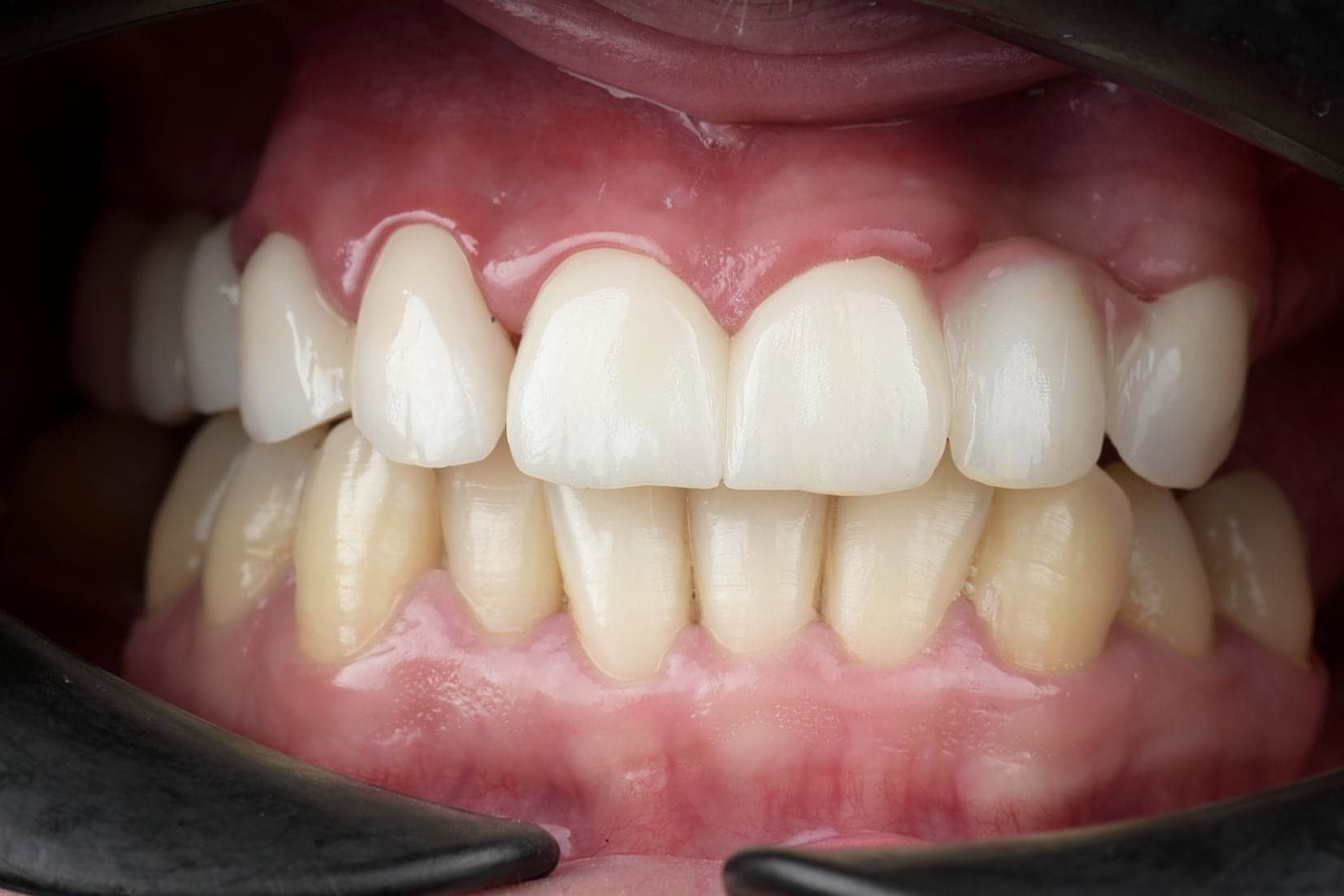
The treatment, and what it gives back
The loss is stopped; the bone does not come back.
Treatment means cleaning below the gum, in the pockets a brush cannot reach, to remove the calculus that sustains the infection. It is done under local anaesthetic where pockets are deep, in one or more appointments depending on the extent.
What to know before starting: it stabilises the disease, it does not rebuild lost bone. Loose teeth do not tighten back, and the gum may even look as if it has receded after treatment, because the swelling has gone. That is a sign of healing, not of deterioration.
Maintenance is the treatment
Periodontitis is controlled, not cured once and for all.
After the mouth is cleared, the bacteria return. A patient who is treated and then seen every three to six months keeps their teeth; the same patient treated and then lost to follow-up comes back a few years later where they started, with less bone.
It is also why periodontitis is treated before implants or veneers: those treatments rest on a foundation that has to be sound, otherwise you are building on something that is leaving.
Periodontal Treatment — Frequently Asked Questions
- Is gum disease reversible?
- Gingivitis, yes, entirely. Periodontitis, no: bone already lost does not return, but the disease is stabilised and the loss stops. What separates the two is whether the bone is affected, which a radiograph shows.
- Is treatment painful?
- Cleaning below the gum is done under local anaesthetic where pockets are deep. Sensitivity to cold for a few days afterwards is common, because the roots are more exposed once the calculus is gone.
- Am I going to lose my teeth?
- That depends on how much bone remains at diagnosis and on how regular the follow-up is afterwards. Periodontitis that is treated and monitored can be controlled; it is the absence of follow-up, more than the initial severity, that costs people teeth.

@estoriaclinic
Get in touch

The message is already written — all that is left is to send it.
Or write to us here
Batna
Cité Bouzourane, Coopérative El Yasmine
Villa N° 15, à côté de la mosquée At-Taqwa
Batna, Algérie
Daily except Friday — 08:30 to 16:30
Get directions