
Dental Hygiene
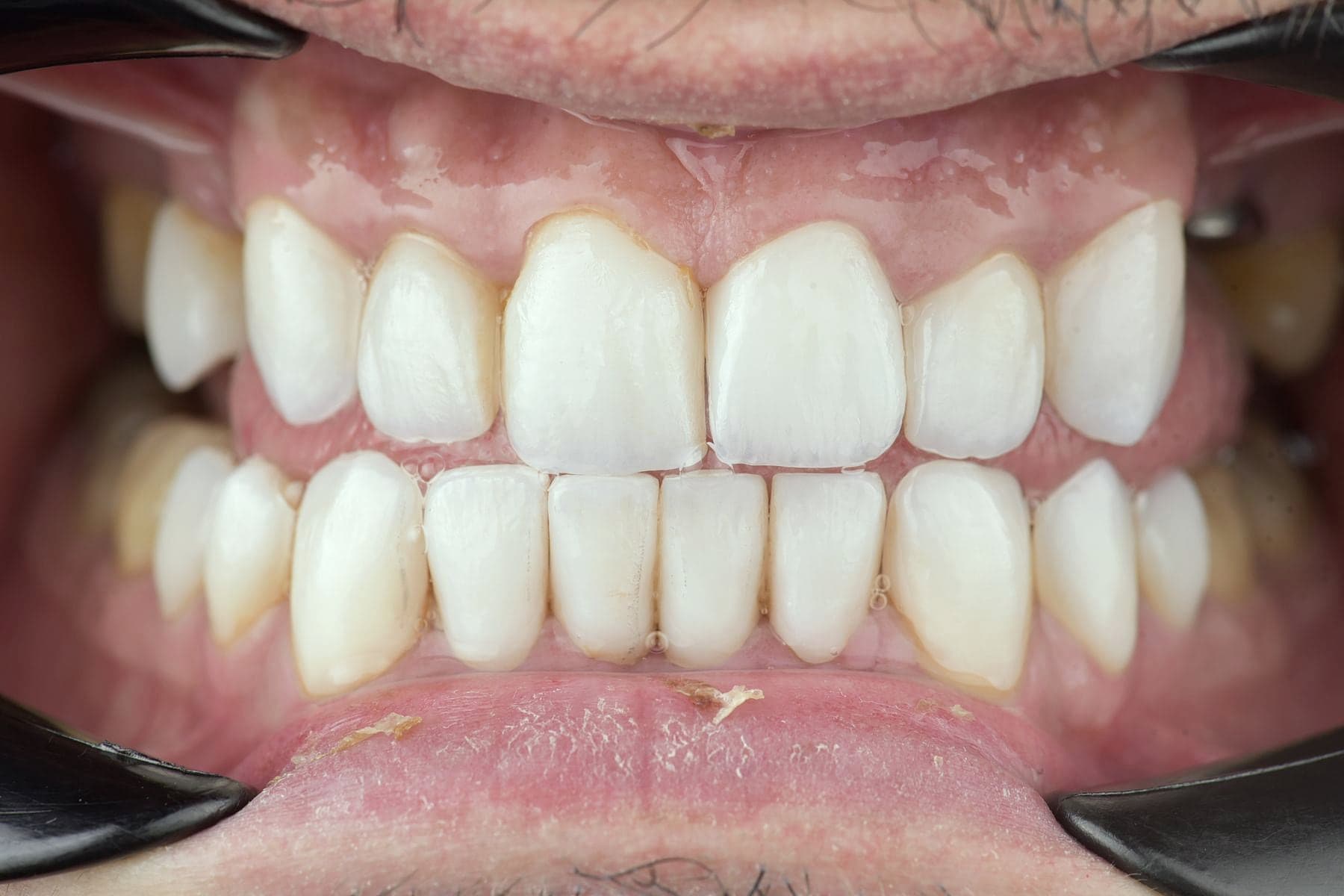
What a scale and polish removes
Calculus does not brush off. That is what makes it calculus.
Plaque is soft and comes off with a brush. Left in place it mineralises within days into calculus, hard and firmly attached: from that point no amount of brushing removes it, however much effort goes in.
Calculus is rough, so it holds still more plaque, and it sustains permanent inflammation in the gum against it. Removing it is not a comfort treatment: it is what breaks the cycle.
What the brush does not do
Two surfaces out of five stay untouched.
A tooth has five surfaces. A brush reaches three. The two surfaces between the teeth, where most adult decay and most gingivitis begin, are reachable only with floss or interdental brushes.
That is why somebody who brushes conscientiously three times a day can still have bleeding gums: the problem is not how much brushing, it is where. Choosing between floss and brushes depends on the size of your gaps, and it is shown at an appointment rather than guessed at.
Learn more about periodontal treatment
What the check-up finds before you do
Decay that hurts is no longer small decay.
Decay only becomes painful as it approaches the nerve, which is late. Between the moment it shows on a radiograph and the moment it announces itself, there is often the difference between a filling and root canal treatment followed by a crown.
That is what the check-up is for, along with measuring gum pockets, spotting wear as it sets in, and monitoring restorations already in place. None of that is visible in a mirror.
Hygiene — Frequently Asked Questions
- How often should I have a scale and polish?
- Twice a year suits most people. It rises to three or four for a smoker, a patient being followed for periodontitis, or somebody whose calculus reforms quickly — that is observed rather than decided in advance.
- Does scaling damage the enamel?
- No. The instruments remove calculus, not enamel. Teeth feeling smoother or gaps looking more visible afterwards comes from what has been taken away, not from anything having been worn down.
- Is scaling painful?
- Generally not. A very inflamed gum can be tender during the appointment, and cold sensitivity for a few days afterwards is common where a lot of calculus has been removed.

@estoriaclinic
Get in touch

The message is already written — all that is left is to send it.
Or write to us here
Batna
Cité Bouzourane, Coopérative El Yasmine
Villa N° 15, à côté de la mosquée At-Taqwa
Batna, Algérie
Daily except Friday — 08:30 to 16:30
Get directions