
Root Canal Treatment

What the treatment removes
The infected nerve, not the tooth.
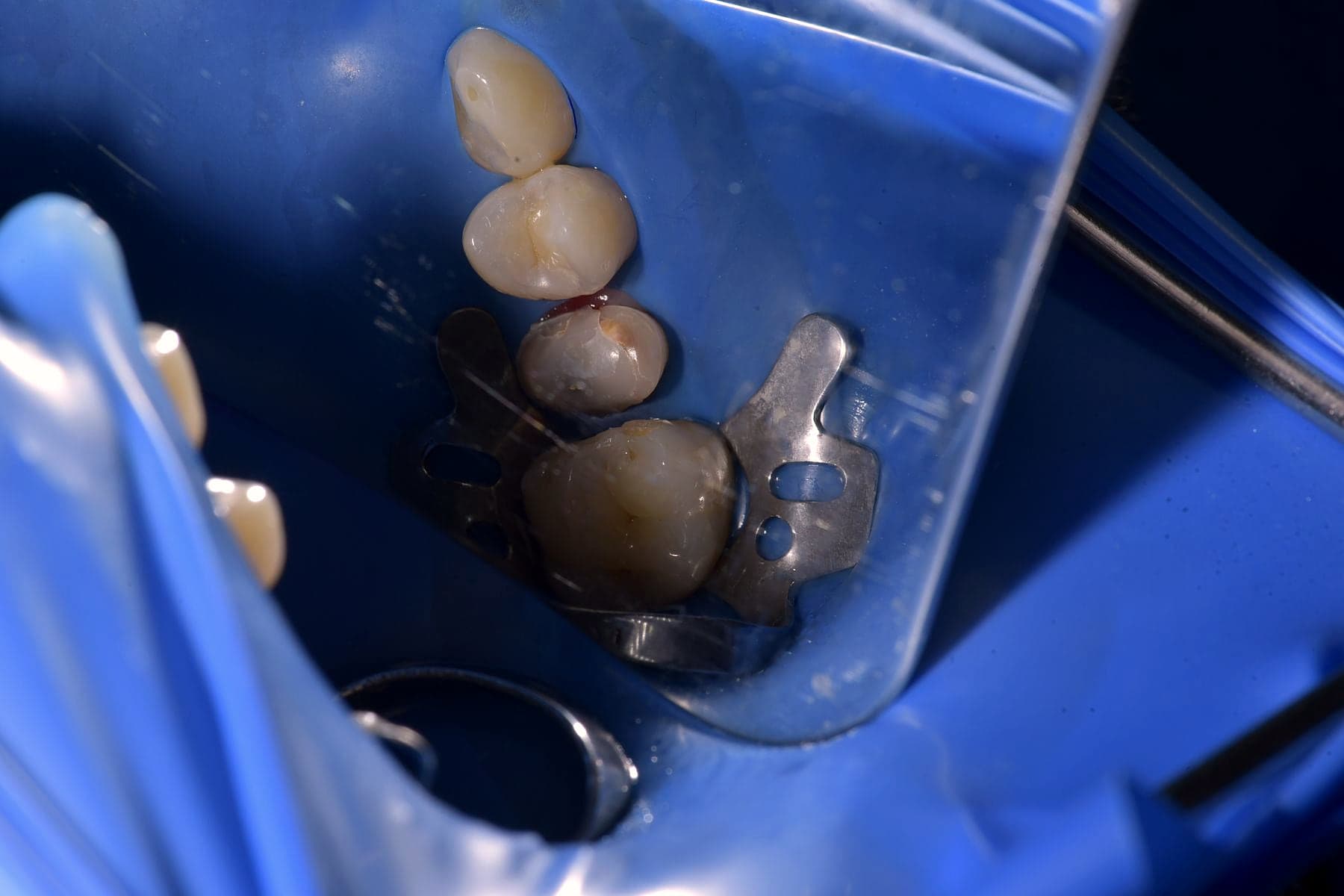
Inside every tooth is living tissue: the nerve and its blood vessels. When deep decay or a fracture lets that tissue become infected, it does not recover on its own. Root canal treatment removes it, disinfects the canals that held it and seals them.
The tooth stays and keeps working. It is an alternative to extraction, not a step before one.
Why the pain stops, then comes back
A tooth that stops hurting is not a tooth that has healed.
Toothache often stops by itself after a few days. That is almost never good news: it means the nerve has died, not that the infection has gone. It carries on silently towards the root tip, where it eventually forms an abscess.
That is the most common reason a tooth that could have been treated simply ends up needing extraction. Pain that goes away on its own still deserves an appointment.
How the appointment goes
One or two appointments, under local anaesthetic.
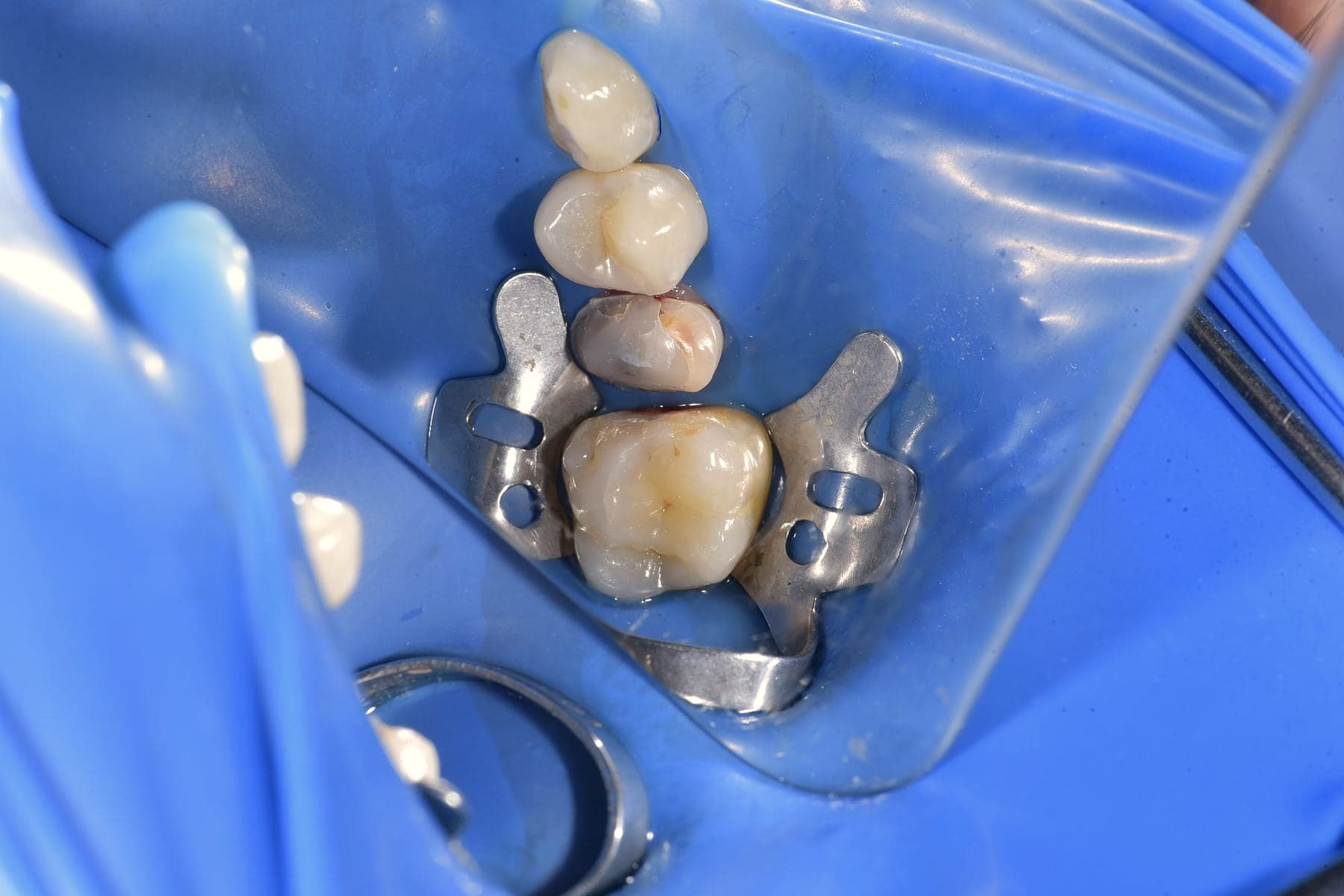
A radiograph establishes how many canals there are and how long the roots run. The tooth is anaesthetised, isolated, then the canals are cleaned and shaped before being sealed.
A molar with three or four canals takes longer than an incisor, and an infected case may need a second appointment to let a dressing work. The number of appointments follows the tooth, not how bad it feels.

Why a crown almost always follows
A root-treated tooth fractures more easily.
A treated tooth no longer has a blood supply and becomes more brittle, and the access made to reach the canals has weakened it further. On a molar, a vertical fracture after a technically successful root canal is the most common way of losing the tooth anyway.
A crown fitted in the following months prevents that. It is the part of the treatment people most readily postpone, and the most expensive part to postpone.
Learn more about dental crownsRoot Canal — Frequently Asked Questions
- Is a root canal painful?
- The appointment is done under local anaesthetic and feels like a somewhat long filling. It is the infection beforehand that hurts, not the treatment.
- How many appointments does it take?
- One or two, depending on the tooth and the state of the infection. A multi-canal molar takes longer than a front tooth.
- Is it better to extract and place an implant?
- Almost never, if the tooth can be saved. A treated natural tooth keeps its root, its ligament and its bone; an implant is a good answer for a tooth already lost, not a desirable replacement for one still standing.
- Will the tooth go dark?
- A root-treated tooth can grey over time, particularly at the front. It can be corrected, and the crown that follows treatment usually settles the question.

@estoriaclinic
Get in touch

The message is already written — all that is left is to send it.
Or write to us here
Batna
Cité Bouzourane, Coopérative El Yasmine
Villa N° 15, à côté de la mosquée At-Taqwa
Batna, Algérie
Daily except Friday — 08:30 to 16:30
Get directions