
Dental Implants
Three parts, not one
The implant, the abutment, the crown.
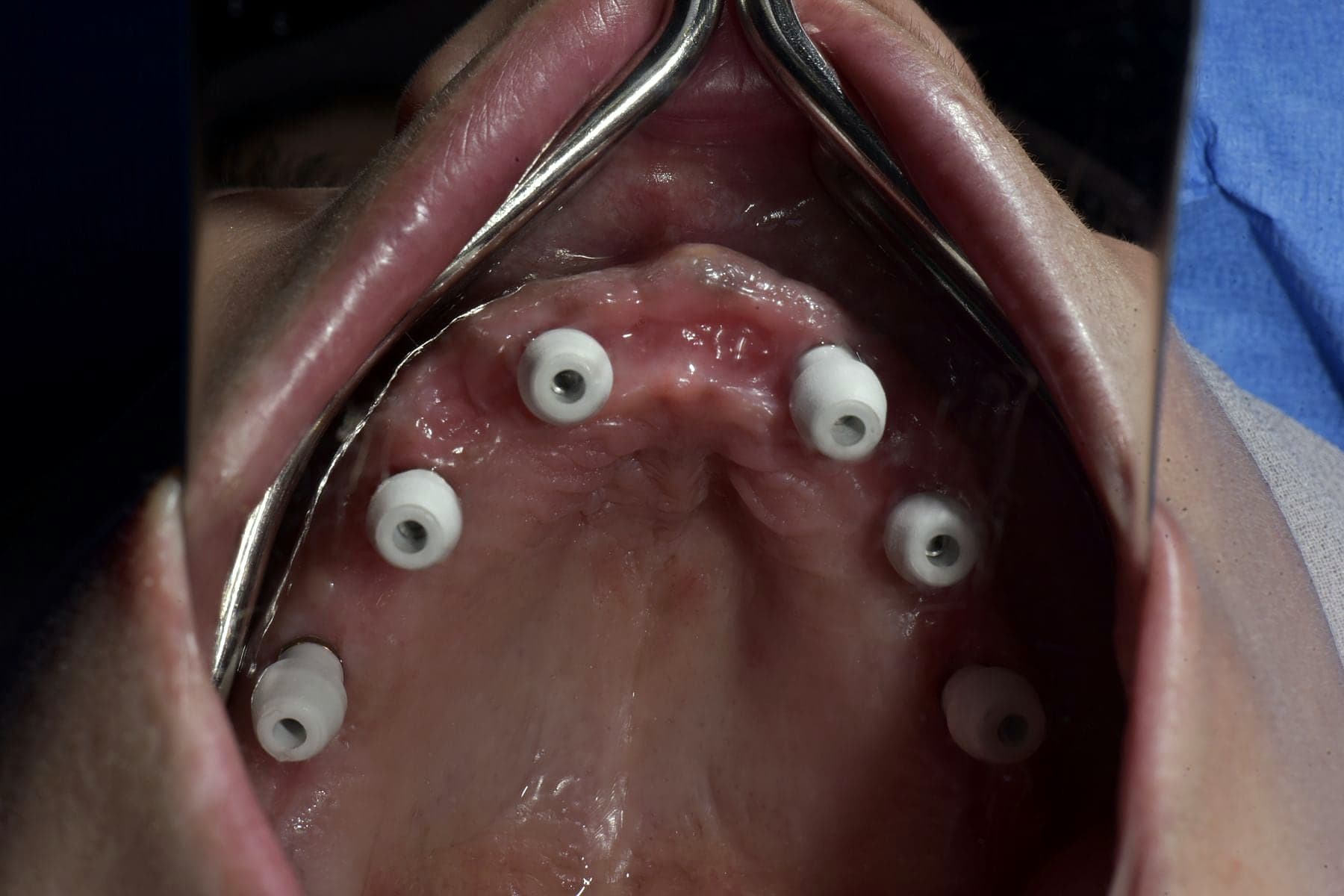
What people call "an implant" is in fact three parts. The implant itself is a titanium screw that replaces the root and fuses to the bone. The abutment screws into it and emerges through the gum. The crown sits on the abutment: it is the only part you see.
That distinction is not pedantry, it is the first thing to check on a quote. A price covering the screw alone is roughly a third of the price of the finished tooth, and it is the most common confusion when comparing two proposals.
What the scan decides
The bone available, before anything else.
Bone recedes where a tooth has been lost, and keeps receding over the years. So the question is not only "can an implant go in" but "is there enough bone left, and exactly where". Imaging answers both, and it is what determines whether a graft is needed first.
That has a practical consequence: the older the extraction, the longer the preparation is likely to be. A tooth lost fifteen years ago and one lost last year are not the same problem.
Learn more about bone grafting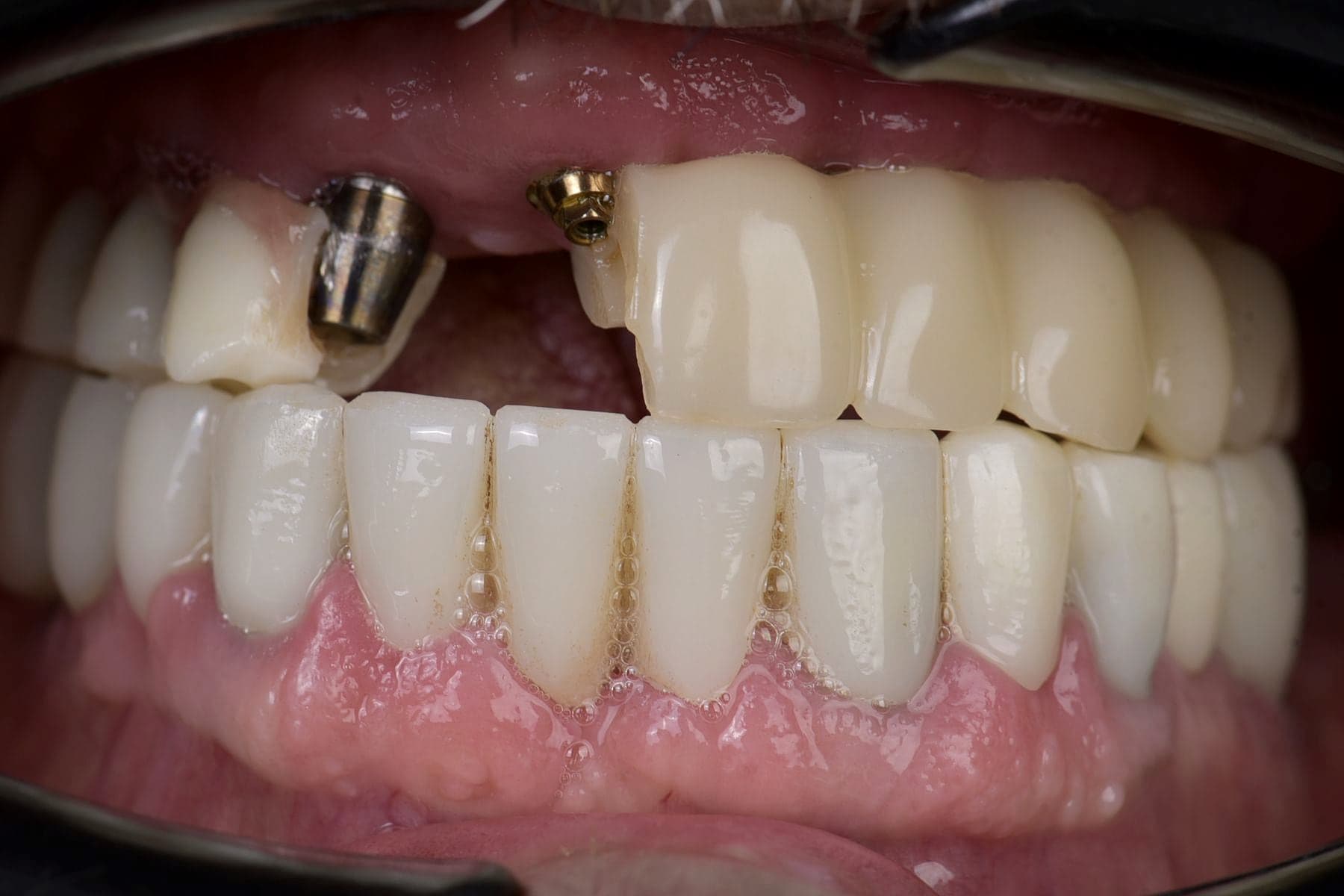
Why three to four months of waiting
The bone must fuse to the titanium. That cannot be rushed.
Between placing the implant and fitting the crown, bone grows onto the titanium surface. That delay is biological: it depends neither on the clinic, nor on the price paid, nor on the brand placed.
For a patient living abroad, this shapes everything else. Two trips three to four months apart: placement on the first, the crown on the second, with the wait spent at home rather than in Batna. The clinic uses Biotech (France) and MegaGen (Korea) implants.
What makes an implant fail
The gum around it, and smoking.
An implant does not decay, but the bone around it can become infected and recede — peri-implantitis, which behaves like gum recession and is the main reason implants are lost years after placement. It sets in painlessly.
Smoking raises that risk markedly, and gum disease present before placement raises it too: that is why periodontal treatment comes before implant work in a treatment plan. Implants and fixed prosthetics placed at the clinic carry a five-year warranty.
Learn more about periodontal treatmentDental Implants — Frequently Asked Questions
- How long does an implant last?
- A long time, provided the gum and bone around it stay healthy. It is not the titanium that gives way, it is the support: hygiene around the implant and regular follow-up decide its lifespan far more than the brand does.
- Is placement painful?
- It is done under local anaesthetic and the surgery itself is not painful. Afterwards it behaves like an extraction: swelling and discomfort for a few days.
- Am I a good candidate?
- That is decided on bone volume, the state of the gums and your medical history, not on age. Smoking and poorly controlled diabetes are the two factors that weigh most. The examination and imaging answer it in one consultation.
- How much does an implant cost?
- From €600 for the complete tooth: implant, abutment and crown, with consultation, imaging and check-ups included. A bone graft or sinus lift is quoted after examination.

@estoriaclinic
Get in touch

The message is already written — all that is left is to send it.
Or write to us here
Batna
Cité Bouzourane, Coopérative El Yasmine
Villa N° 15, à côté de la mosquée At-Taqwa
Batna, Algérie
Daily except Friday — 08:30 to 16:30
Get directions