
Dentures and Dental Prostheses
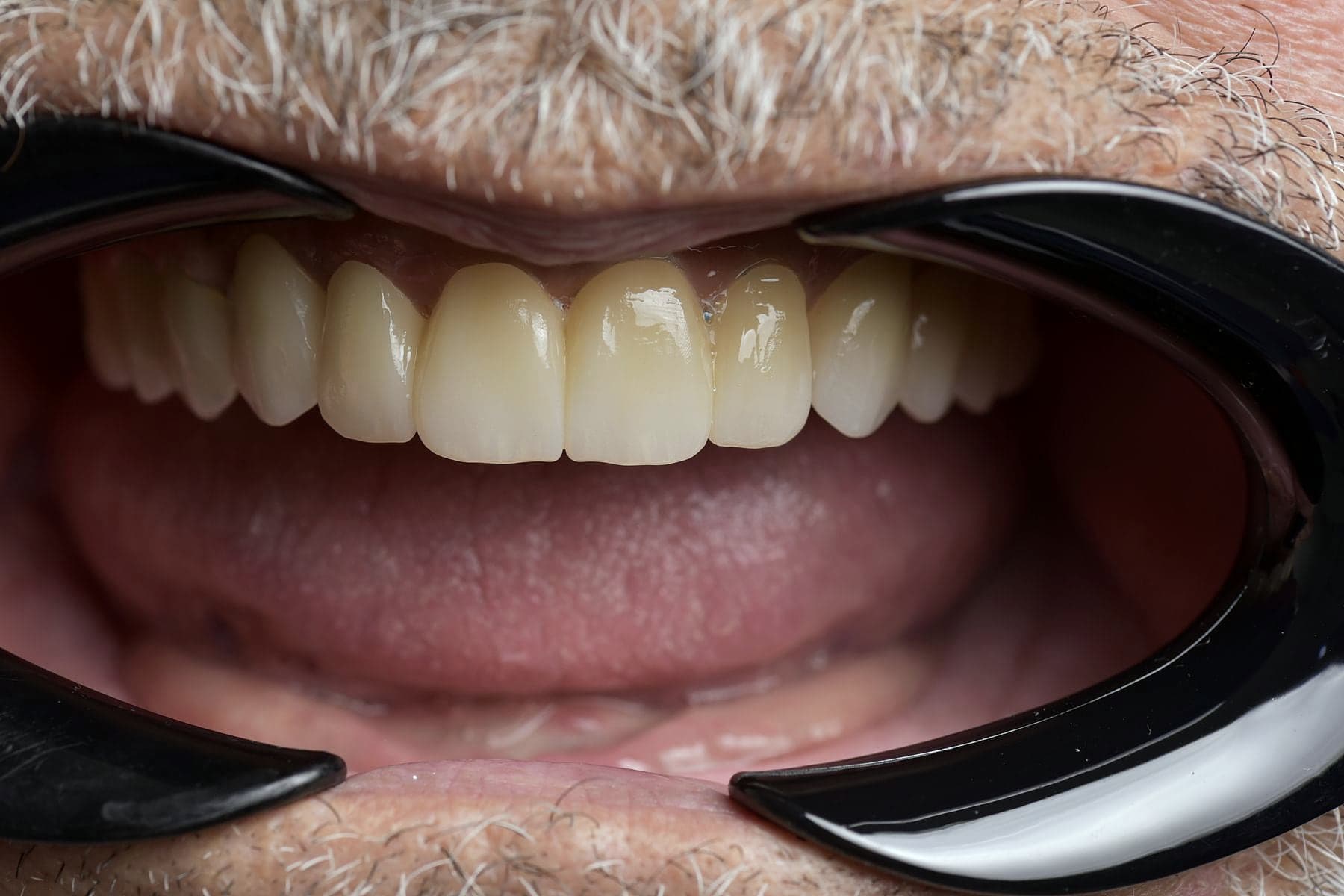
When a prosthesis is the right answer
Replacing several teeth, where implants are not the answer.
A prosthesis replaces several missing teeth with a removable or fixed assembly. It remains the answer where bone is too resorbed to carry implants, where general health advises against surgery, or where the budget for implant rehabilitation is out of reach.
Replacing lost teeth is not only about chewing: with nothing to lean on, the remaining teeth tip towards the gap and the bite gradually goes out of order.
Removable or fixed: what decides
How many teeth remain, and the bone available.
A fixed prosthesis — a bridge, or one on implants — does not come out and is lived with like teeth. It needs abutments: sound teeth either side, or implants.
A removable prosthesis is taken out to be cleaned, rests on the gum and the remaining teeth, and costs considerably less without surgery. It is less stable and takes a period of adjustment. The choice follows what is available to anchor it, not a preference in principle.
Learn more about bridges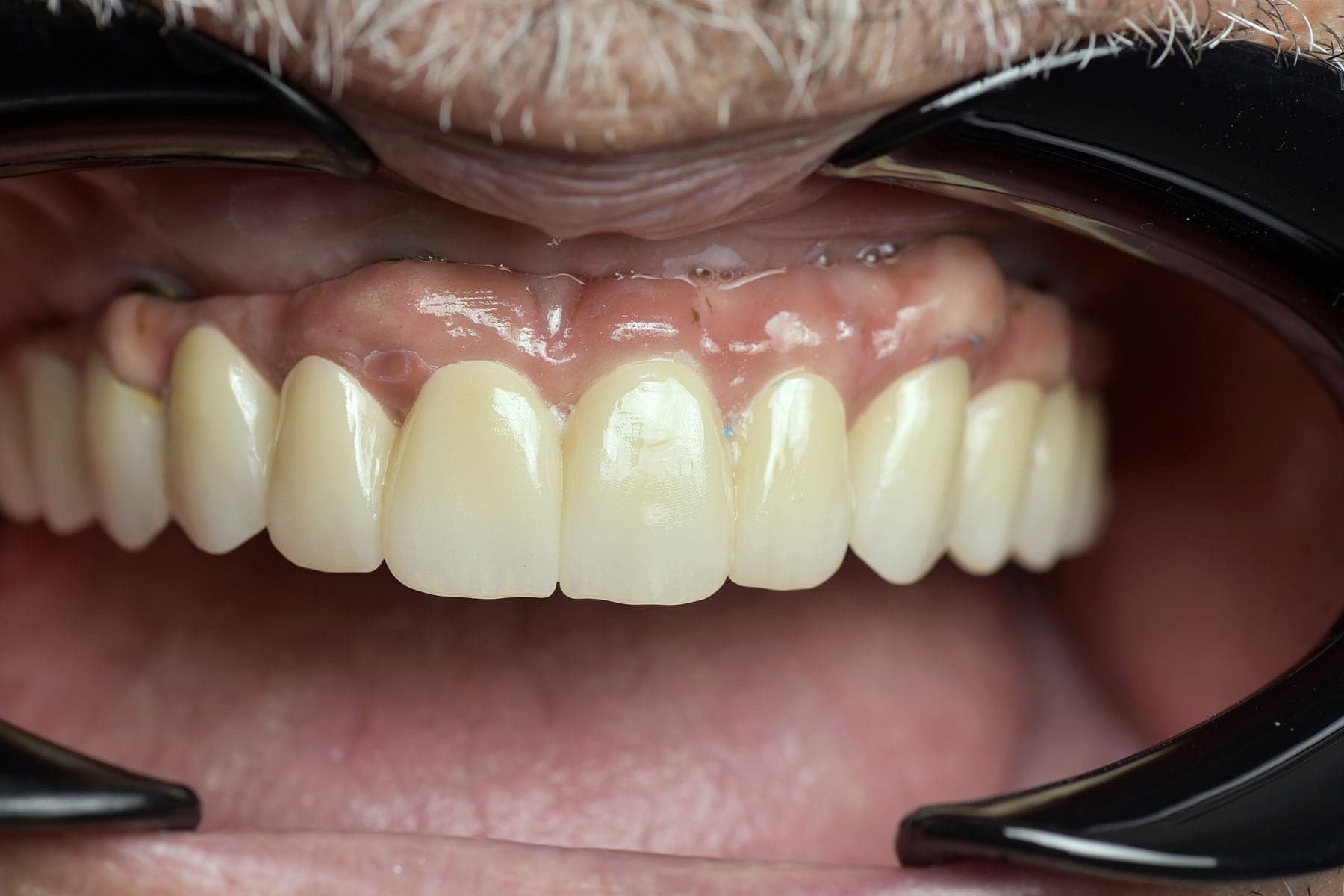
Complete and partial dentures
Every tooth in an arch, or a few.
A complete denture replaces a whole arch and is held by resting on the gum and the bone beneath. In the upper jaw the palate helps a great deal; in the lower, where there is no palate and the bone resorbs more, stability is the main problem.
A partial denture replaces a few teeth and clasps onto those remaining. Its advantage is adaptability: when a further tooth is lost, it can often be modified rather than remade.
Implant-supported dentures
Two implants change nearly everything, in the lower jaw.
A lower complete denture that moves when eating can be stabilised by a few implants it clips onto. It stays removable for cleaning, but it no longer lifts.
For somebody wearing a complete denture, that is often the best ratio of cost to change achieved: lighter than a full fixed rehabilitation, and not comparable to a denture resting on the gum alone.
Learn more about All-on-4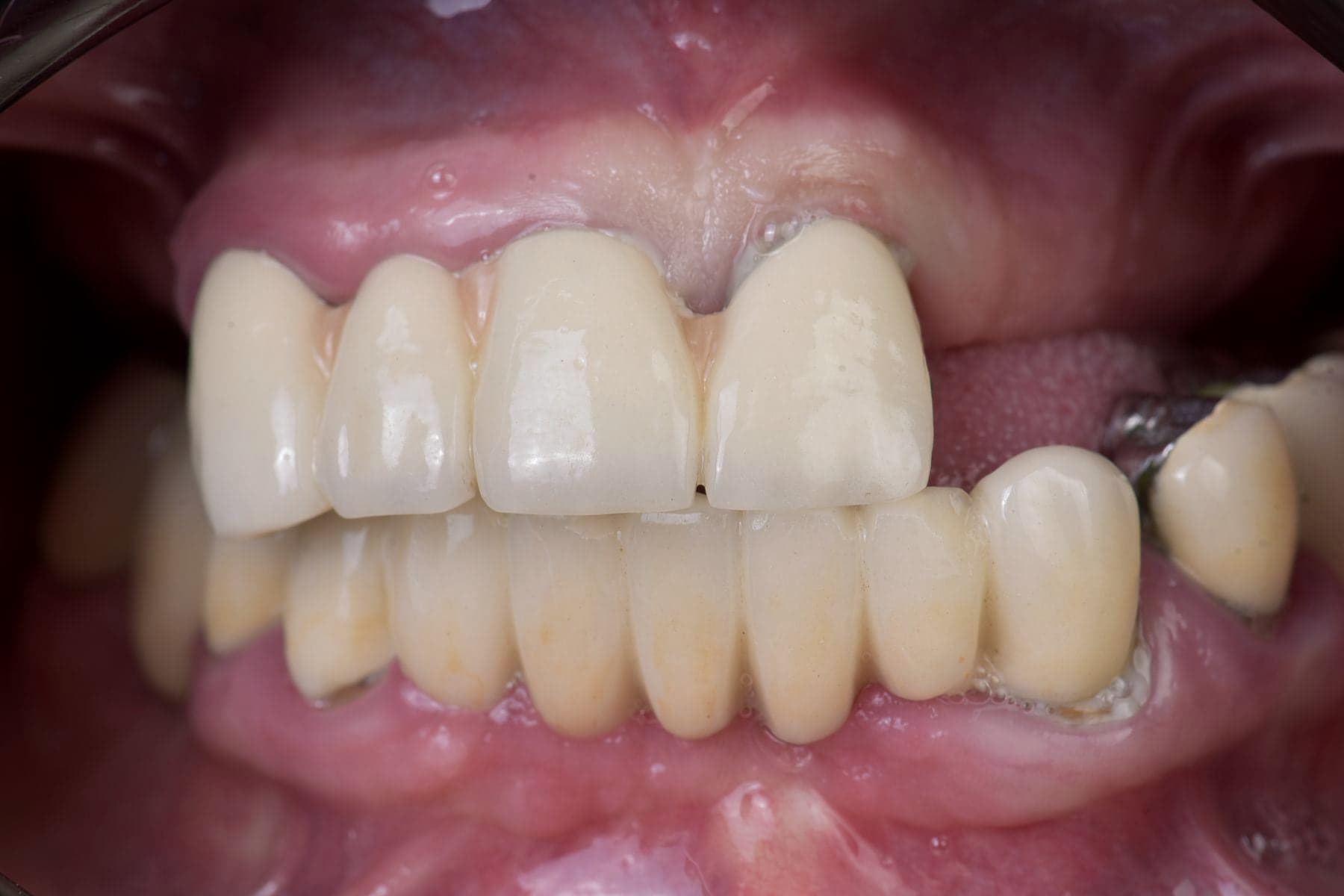
The stages, and how many appointments
Several try-ins, deliberately.
A prosthesis is built in stages: impressions, recording how the jaws meet, a try-in of the teeth set in wax, then fitting. The wax try-in is where shape and shade are corrected, while everything can still be changed.
That needs several appointments close together. For a patient coming from abroad it is something to raise before booking: the fabrication cannot be compressed and assumes a stay of a certain length.
Living with one: adjusting and caring for it
The first weeks are the hardest.
A new prosthesis feels intrusive, increases saliva and changes how certain sounds are pronounced. That fades within a few weeks. Pressure points nearly always appear: they are corrected in minutes in the chair, and should neither be left nor adjusted at home.
Clean the prosthesis out of the mouth, with a brush and soap rather than abrasive toothpaste, and take a complete denture out at night so the gum can recover. Since bone keeps resorbing under a removable prosthesis, a reline should be expected over the years.
Dentures and Dental Prostheses — Frequently Asked Questions
- How long does it take to get used to one?
- A few weeks to eat and speak normally, longer for a first complete denture. The adjustments in the first days are part of the treatment, not a sign that something was done badly.
- Can you eat normally?
- Gradually. You start with soft food cut small, chewing on both sides at once so the denture does not tip. Sticky and very hard foods stay difficult with a complete denture.
- Should it come out at night?
- For a complete denture, yes: the gum needs to be relieved, and wearing it constantly encourages irritation and fungal infection. It is kept in water, never dry.

@estoriaclinic
Get in touch

The message is already written — all that is left is to send it.
Or write to us here
Batna
Cité Bouzourane, Coopérative El Yasmine
Villa N° 15, à côté de la mosquée At-Taqwa
Batna, Algérie
Daily except Friday — 08:30 to 16:30
Get directions